
Part I
When the Bitcoin Treasury Strategy Ends
What the companies that walked away can teach us about corporate Bitcoin
10 min read
Read Part I
Satoshi Institute Research · Three-part series
Exits, structural vulnerabilities, and the missing evidence behind corporate Bitcoin adoption.
Begin with Part IThe research question
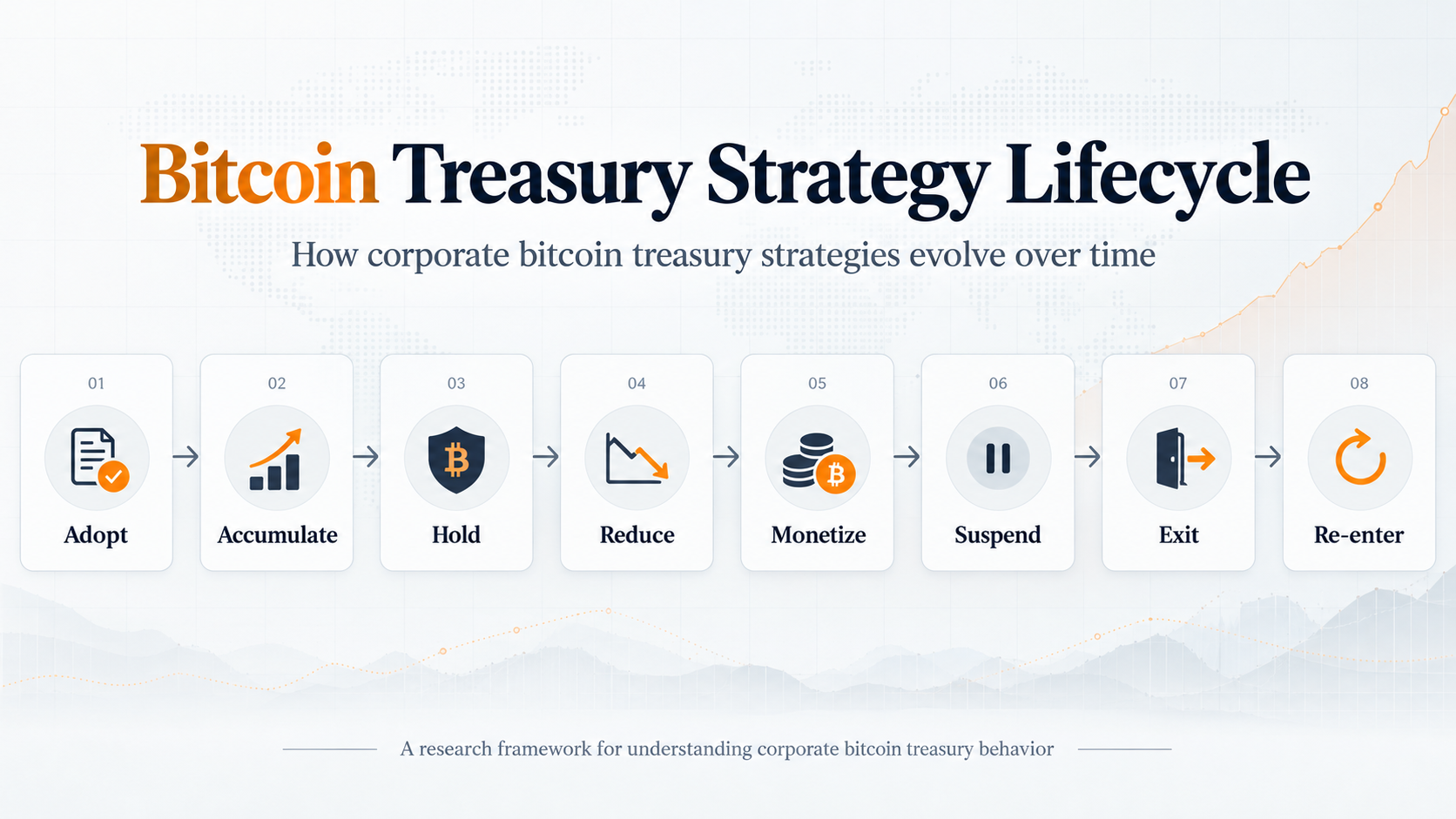
Corporate Bitcoin adoption is usually measured at the point of entry: a board approves a strategy, capital is raised, and Bitcoin appears on the balance sheet. The announcements are visible. The accumulation is counted. The companies that reduce, suspend, monetize or exit their positions receive much less systematic attention.
This three-part Satoshi Institute research series examines that other half of the lifecycle. It asks what companies that change course can teach CFOs, boards and institutional researchers about the durability of a Bitcoin treasury strategy. An exit is not automatically a failure. It may reflect debt repayment, a better use of capital, a changed shareholder mandate, legal constraints, or a deliberate separation between operating exposure and treasury exposure.
Part I: When the Bitcoin Treasury Strategy Ends examines companies that walked away, reduced their holdings, or left open the possibility of returning. The cases make clear why a treasury policy needs an exit architecture, not only an acquisition rationale.
Part II: Bitcoin Treasury Strategies Rarely Fail Because of Bitcoin separates the asset thesis from the corporate structure around it. Leverage, liquidity, financing maturities, opportunity cost and governance can determine whether a company is able to keep the position it originally intended to hold.
Part III: The Missing Data Problem considers the research consequences. A current-holdings leaderboard cannot, by itself, explain adoption, attrition or re-entry. Exits must remain in the historical record, and holdings must be distinguished from strategy state.
Together, the articles move the discussion from Bitcoin counting to treasury intelligence: how a position is financed, how decisions are governed, and what evidence supports the company’s posture as conditions change.
Part I
What the companies that walked away can teach us about corporate Bitcoin
10 min read
Read Part IPart II
The real vulnerabilities are often leverage, liquidity, capital structure and governance
9 min read
Read Part IIPart III
Why Bitcoin treasury trackers must record the exits, not just the entrances
9 min read
Read Part III